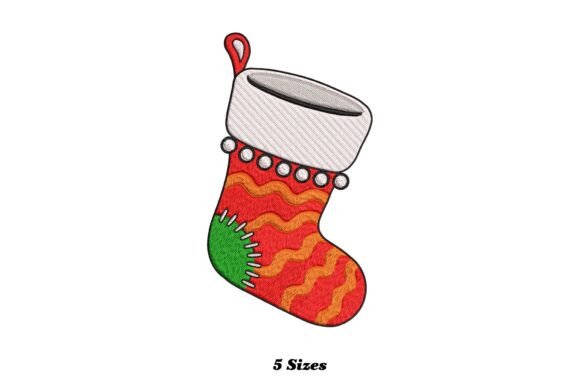
Festive Candy Cane Embroidery Design
A Practical Review for Small Business Merchandise & Branded Patches
As an embroidery designer who’s developed hundreds of commercial designs for cafés, boutiques, bakeries, florists, and handmade brands, I approach every new machine embroidery design with two questions: Does it translate reliably across real-world business applications? and Does it strengthen—rather than dilute—the brand’s voice? The Festive Candy Cane Embroidery Design immediately stands out for its clarity and seasonal warmth—but let’s go deeper than charm. This isn’t just a decorative motif. It’s a functional asset for small business merch, and how you deploy it matters.
First Impression: Classic, Friendly, and Professionally Balanced
From the title and description alone, the Festive Candy Cane Embroidery Design signals approachable holiday spirit—not kitschy, not overly ornate, but instantly recognizable. The mention of “classic red and white stripes” suggests strong visual hierarchy and intentional contrast, critical for legibility at small sizes. For a small business owner, that means immediate emotional resonance without sacrificing polish. It reads as handmade product warmth with commercial embroidery precision—ideal for brands that value authenticity and professionalism in equal measure.
Real-World Performance Across Business Touchpoints
The Festive Candy Cane Embroidery Design shines where consistency and recognition matter most:
- Embroidered patches: Works exceptionally well as a sew-on or iron-on patch for staff aprons, tote bags, or boutique merchandise. Its balanced proportions hold up cleanly at both 3.5” and 7×7 hoop sizes—meaning one file can serve dual purposes: small chest accents and larger back-of-cap or bag centerpieces.
- Staff uniforms & aprons: As an apron embroidery detail or sleeve accent, it adds seasonal personality without overwhelming workwear. The stripe rhythm creates subtle movement—ideal for food service or creative studios wanting cheerful, non-distracting branding.
- Cap embroidery: On structured caps, place it front-and-center or subtly on the side gusset. Its clean outline avoids distortion on curved surfaces—provided proper stabilizer is used (more on that below).
- Tote bag design & product packaging accents: Scales beautifully to medium-to-large placements. Paired with a simple monogram or shop name, it becomes a cohesive tote bag design system—not just decoration, but part of your visual identity.
- Etsy branding & customer gifts: When stitched onto linen tea towels, canvas pouches, or gift tags, it elevates perceived value. Customers associate crisp, well-digitized candy cane motifs with care and attention—key for handmade product positioning.
Where to Use the Festive Candy Cane Embroidery Design Thoughtfully
Even strong designs have boundaries. Here’s where caution—and testing—is essential:
- Small patch sizes under 2”: While optimized for 3.5”, fine stripe definition may blur if shrunk further. Always run a test stitch-out before bulk production.
- Dark uniforms or textured fabric: Red thread on black twill or heavy canvas requires high-contrast thread selection and denser underlay. Confirm thread colors support visibility—not just aesthetics.
- Frequent-wash items (e.g., café aprons): High stitch density helps durability, but over-digitized fills risk puckering. Review the stitch density in your embroidery software—especially in striped transitions.
- Curved surfaces like cap fronts: Even well-designed files need appropriate backing. Use cutaway stabilizer and moderate tension to prevent distortion.
- Printable mockups for client approval: Don’t rely solely on digital previews. A physical test on actual fabric gives truer insight into how the Festive Candy Cane Embroidery Design will land.
How It Shapes Brand Identity & Customer Trust
In small business merch, every stitch communicates intention. The Festive Candy Cane Embroidery Design reinforces trust by signaling craftsmanship—not mass production. When customers see consistent, well-executed embroidery across your tote bags, staff caps, and product labels, they subconsciously associate your brand with reliability and care. That’s especially powerful for local businesses: a florist’s holiday bouquet wrap tag with this design feels personal; a bakery’s apron stitching says “we take pride in every detail.” It also supports visual consistency across touchpoints—strengthening recall and reinforcing your brand identity without needing words.
Practical Embroidery Designer Notes Before Production
Before committing to bulk runs or client projects, here’s what I always verify with the Festive Candy Cane Embroidery Design:
- Run a test stitch-out in black and white thread first—this reveals spacing issues, floating elements, or uneven density invisible in color previews.
- Check performance at your smallest intended patch size. Does the stripe contrast hold? Are edges crisp?
- Review thread color recommendations against your fabric palette—especially for dark or heathered textiles.
- Inspect letter spacing, if any text is included (note: the description doesn’t mention text, so confirm if your version includes custom wording).
- Verify hoop size compatibility—both 3.5” and 7×7 are noted, but ensure your machine supports both without re-hooping mid-design.
- Test on your target fabric with correct stabilizer—different weights and weaves react uniquely to stitch build-up.
- Create a physical or high-fidelity printable mockup for client sign-off—avoid assumptions about scale or tone.
- Compare the Festive Candy Cane Embroidery Design beside your other design assets (logos, fonts, patterns) to ensure visual harmony.
- Confirm commercial licensing explicitly—this is non-negotiable for small business merch, Etsy sellers, and apparel decorators using the digital embroidery file in client work.
Remember: the Festive Candy Cane Embroidery Design isn’t just a holiday flourish—it’s a strategic tool. Used intentionally, it deepens connection, elevates perception, and delivers measurable value across your small business merch, custom apparel, and branded experiences. But only when grounded in real-world testing, thoughtful placement, and alignment with your broader brand identity.