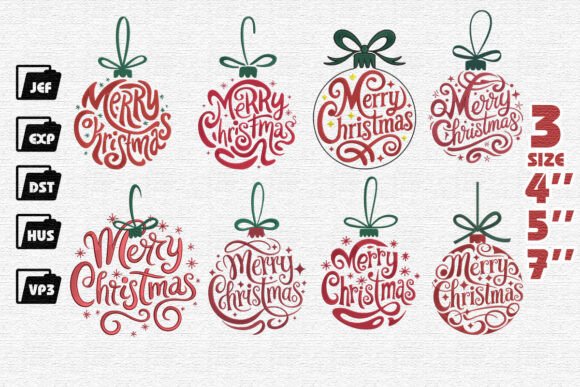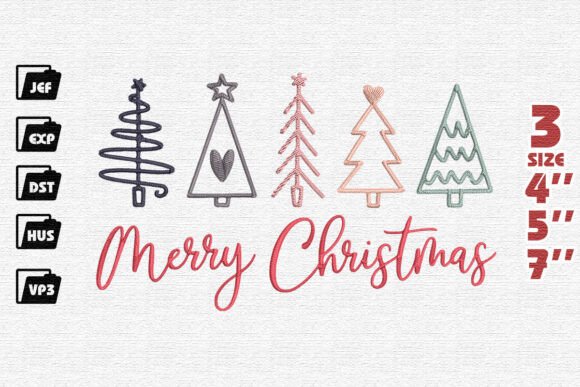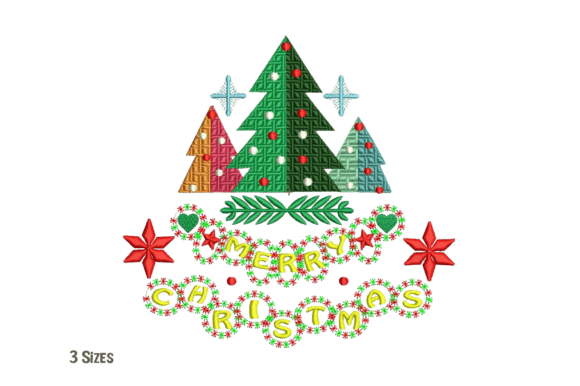
Merry Christmas Embroidery Design
A Practical Review for Small Business Merch & Branded Patches
As an embroidery designer who’s digitized and stitched thousands of commercial projects—from café aprons to boutique tote bags—I approach every machine embroidery design with two questions: Will it hold up in production? and Does it strengthen brand identity—not just holiday cheer? The Merry Christmas Embroidery Design delivers a warm, cohesive visual story: charming Christmas trees, decorative stars, and a joyful garland spelling “Merry Christmas.” At first glance, it reads as friendly, classic, and intentionally handmade—not overly ornate or digital-looking. That’s a win for small businesses aiming for approachable authenticity over mass-produced polish.
How It Performs Across Real Business Applications
This design shines where small businesses need consistent, scalable branding: embroidered patches for staff uniforms, chest accents on work shirts, sleeve details on aprons, front-cap embroidery for seasonal pop-ups, and subtle yet festive marks on tote bags and product packaging. Its balanced composition—trees framing the central garland—creates natural focal points, making it adaptable without feeling cramped or scattered.
For a local bakery or florist launching holiday gift sets, the Merry Christmas Embroidery Design works beautifully as a sewn-on patch on reusable cotton totes or linen napkin wraps. A pet brand could use it on bandana tags or staff vests—its cheerful rhythm supports playful professionalism without sacrificing legibility. Etsy sellers and handmade studios benefit most from its versatility: it translates cleanly into printable mockups for client previews, pairs well with existing design assets (like logo lockups or monogrammed initials), and holds visual weight across varied fabric textures—from twill caps to canvas aprons.
Because it’s offered in three sizes, scaling is intuitive. The mid-size version anchors nicely on standard 3”–4” embroidered patches; the smallest fits cap fronts without distortion; the largest carries presence on tote bag corners or oversized apron pockets. That flexibility reduces redesign time—critical when juggling multiple small business clients during peak season.
Where to Use It Thoughtfully
Like any well-intentioned design, the Merry Christmas Embroidery Design has boundaries—and recognizing them upfront prevents rework. Avoid pushing it below 2.5” wide on curved surfaces like cap fronts unless you’ve tested stitch density and letter clarity. The garland’s delicate star accents and slender tree outlines may soften on heavy-textured fabrics (e.g., thick denim or looped terry) or dark uniforms without high-contrast thread colors. Similarly, frequent washing—common for café aprons or pet-care gear—demands tight stitch tension and appropriate stabilizer backing to prevent fraying or puckering around fine garland loops.
Tiny lettering in “Merry Christmas” means legibility drops sharply under 2”. If your small business merch includes mini-patches (e.g., 1.5” labels for product tags), test the smallest size on actual fabric first. Also, avoid placing it directly over seams or stretch zones (like elbow joints on sleeves) without reinforcing stabilizer—those areas pull threads more aggressively during wear and laundering.
Impact on Brand Identity & Customer Perception
Seasonal embroidery isn’t just decoration—it’s a trust signal. When customers see a thoughtfully stitched Merry Christmas Embroidery Design on a local shop’s tote or staff apron, they read craftsmanship, attention to detail, and investment in experience—not just inventory. That elevates perceived product value, especially for handmade products or premium service brands. Consistent use across touchpoints (caps + totes + packaging) builds visual recognition faster than standalone social posts. And because this design leans classic rather than trendy, it avoids dating your merch—reusable year after year with minimal refresh.
Crucially, it doesn’t overwhelm brand identity. Unlike bold typographic holiday designs that compete with logos, the Merry Christmas Embroidery Design functions as supportive accent—not primary mark. That makes it ideal for co-branding: pair it beside your shop name on an apron, or layer it subtly beneath a logo on a tote bag. It says “we celebrate with care,” not “we’re only about the season.”
Essential Designer Notes Before You Stitch
- Test in black and white first. Confirm contrast between tree silhouettes, star highlights, and garland text before committing to thread colors.
- Verify small-patch performance. Run the smallest size through your embroidery software’s preview mode—check for stitch overlap in tight curves and spacing between letters.
- Review thread color contrast. On dark fabrics, opt for matte metallic or high-sheen white threads to lift stars and garland without glare.
- Inspect spacing and density. Ensure trees don’t crowd the garland—tight spacing increases stitch density, raising risk of fabric distortion on lightweight materials.
- Confirm hoop size compatibility. Match the design’s largest dimension to your most-used hoops (e.g., 4x4”, 5x7”) to minimize re-hooping mid-production.
- Test on real fabric. Stitch samples on your target material—especially textured or stretchy substrates—to assess how stars and tree branches settle post-stabilization.
- Use proper stabilizer. Tear-away works for stable wovens; cut-away adds durability for knits or high-wash items like aprons.
- Create a printable mockup. Show clients how the Merry Christmas Embroidery Design integrates with their logo, uniform color, and garment style—before digitizing or stitching.
- Compare beside other design assets. Does it harmonize with your current logo, font system, and seasonal palette? Visual consistency builds long-term brand equity.
- Confirm commercial licensing. Since this is intended for small business merch and branded patch use, ensure your purchase includes rights for resale, promotional distribution, and client-facing embroidery services.
The Merry Christmas Embroidery Design isn’t just festive—it’s functional. For embroidery shops, apparel decorators, and small business owners building memorable, tactile brand experiences, it bridges seasonal warmth with professional execution. Used intentionally—with attention to fabric, scale, and context—it becomes more than holiday decor. It becomes part of your story.