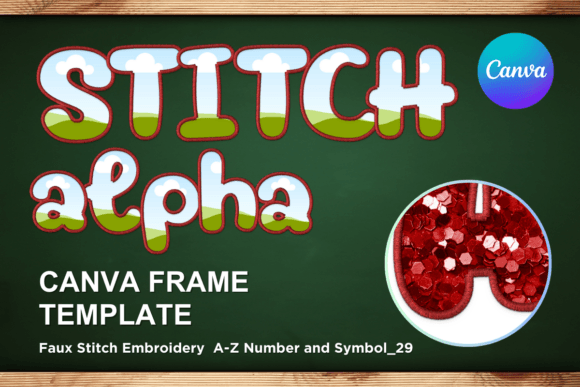
Faux Embroidery Canva Frame Letters_29
First Impression: Charming, Clean, and Craft-Fair Ready
As an embroidery designer who’s set up at over 40 craft fairs—from snowy holiday markets to sun-drenched summer pop-ups—I opened Faux Embroidery Canva Frame Letters_29 expecting a quick visual read. What landed was immediate: soft charm meets modern minimalism. The “faux embroidery” cue tells me this isn’t meant for actual stitching—it’s a digital design asset built for visual storytelling, not machine execution. With its 12×12 inch paper size and Canva frame template link delivered via PDF, it leans into the Photo Collage category with intention—ideal for creating cohesive, gift-ready displays without thread or hoop.
Where It Shines in Real Booth Life
In my booth, I rotate between embroidered tote bags, linen aprons, tea towels, and fabric pouches—all anchored by strong visual themes. Faux Embroidery Canva Frame Letters_29 doesn’t replace real stitch work—but it elevates everything around it. I use it as a printable mockup backbone: layering photos of my actual embroidered tea towel designs inside its frames, then printing those collages on matte cardstock for tabletop signage. Customers pause longer when they see a clean, styled grid showing how “Herb Garden Apron” looks paired with matching “Lemon & Lavender” tea towels—framed exactly like Faux Embroidery Canva Frame Letters_29.
It also works beautifully as a booth sample enhancer. Instead of hanging raw fabric swatches, I mount small embroidered patches inside the Canva frames, then prop them on acrylic stands. The result feels intentional, boutique-level—not DIY-casual. For Etsy sellers and small shop owners, this same framing technique builds instant brand consistency across listings: one cohesive visual language across your shop banner, product mockups, and Instagram story highlights.
Performance Across Product Types
- Tote bag design: Use as a printed label tag or interior care card—frame your logo + care instructions with Faux Embroidery Canva Frame Letters_29 for premium unboxing.
- Apron embroidery: Not for stitching—but perfect for pairing photo mockups of your apron line with handwritten-style lettering in the frame, reinforcing handmade warmth.
- Tea towel embroidery: Print framed collages showing three towel variations (e.g., “Morning Brew,” “Bake Day,” “Garden Gather”)—customers instantly grasp your range.
- Embroidered patch: Display physical patches inside the frames on foam core. Adds depth and dimension without clutter.
- Fabric pouch & pillow cover: Create lifestyle flat-lays using the frames as subtle borders—no distraction, just elevated context.
- Craft fair signage: Print full-size 12×12 frames on cardstock, write seasonal offers inside (“Spring Collection — 15% Off”), and lean them against baskets.
What Makes It Sell—And What Requires Care
Faux Embroidery Canva Frame Letters_29 sells because it’s fast, flexible, and finish-ready. At a craft fair, you don’t have time to build custom layouts from scratch between customers. Drag-and-drop in Canva means you can refresh your display mid-day—swap fonts, adjust spacing, insert new product shots—and print again in under five minutes.
But here’s what I watch closely:
- Clarity at scale: Tiny lettering loses impact on 12×12 prints viewed from 3 feet away. I enlarge key words (like “Handmade” or “Locally Stitched”) and keep supporting text minimal.
- Fabric texture interference: If printing directly onto textured paper (like kraft or linen cardstock), fine lines blur. I stick to smooth matte stock for crisp edges.
- Color contrast: On dark booth backdrops, light-gray frames fade. I adjust Canva’s fill opacity or add a thin black stroke for visibility.
- Commercial use: Since this is a digital embroidery file-adjacent asset—not a machine embroidery design—I confirm licensing terms before using it on resale items like printed tags or packaging. Always check before selling finished product.
Designer Notes You’ll Actually Use
Before I commit to a full run of framed signage or listing mockups, I follow my own production checklist:
- Test-print one frame on my exact paper stock—no assumptions about brightness or bleed.
- Open the Canva template and verify all layers are unlocked and editable (some “custom made” templates lock branding elements).
- Create one real-world mockup: photograph my best-selling embroidered tote inside the frame, then hold it up in natural light—does it look inviting, not stiff?
- Compare how the frame reads beside actual stitched pieces—if the faux style feels too flat next to rich thread texture, I soften the frame’s border weight or add a subtle shadow.
- Check thread colors in nearby embroidery samples: if my current palette is mustard, sage, and cream, I pull Canva’s color picker to echo those tones in the frame accents.
- Ask: “Would a customer take a photo of this in my booth?” If yes—it’s booth-strong. If it feels like filler, simplify.
Final Verdict: A Quiet Powerhouse for Handmade Sellers
Faux Embroidery Canva Frame Letters_29 won’t stitch itself—but it makes your handmade product look more intentional, more valuable, and more memorable. In a sea of rustic chalkboards and generic clipart, this Graphics asset delivers quiet sophistication. It supports your craft without competing with it. For Etsy sellers juggling listings, craft fair vendors racing against setup deadlines, and embroidery business owners building recognizable brands—it’s not just another digital download. It’s visual scaffolding that lifts everything else you make.
Use it to frame your story—not just your letters.