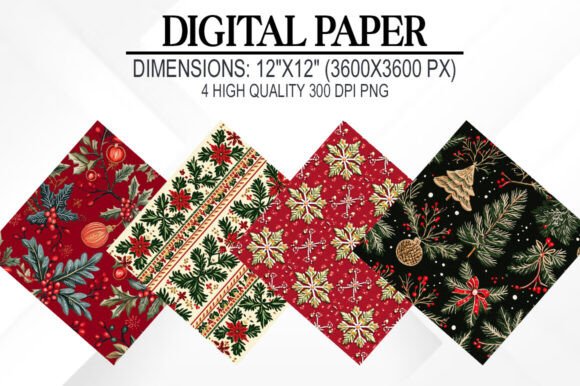
Christmas Tree Embroidery Digital Papers
A Designer’s First Look: Clean, Festive, and Ready for Real Projects
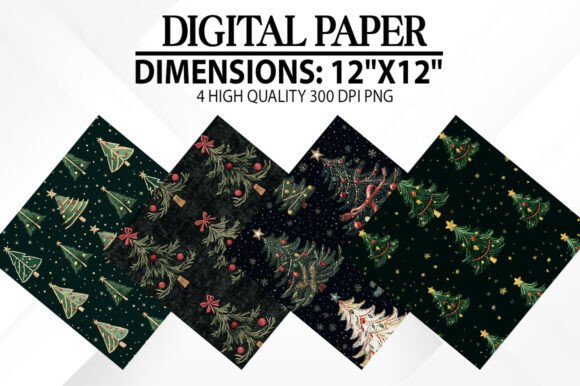
As someone who develops and digitizes embroidery designs for small-batch apparel, nursery decor, and Etsy sellers, I approached the Christmas Tree Embroidery Digital Papers with a practical eye—not just “Is it pretty?” but “Can I turn this into a reliable, stitchable, sellable product?” The first impression is strong: four PNG files with transparent backgrounds, crisp at 300 DPI, and clearly designed with holiday charm in mind. These aren’t clipart-style trees—they carry a hand-drawn warmth, subtle texture, and balanced negative space that reads beautifully on fabric. The mood is joyful but not overwhelming: think cozy kitchen towels, minimalist baby blankets, or boutique sweatshirt accents—not over-the-top glitter bombs.
Where This Design Fits Naturally in Your Workflow
The Christmas Tree Embroidery Digital Papers sit comfortably between graphic design and machine embroidery prep. Because they’re high-res PNGs—not native embroidery files—they’re best used as foundational assets: for mockups, applique templates, layered design elements, or as references when digitizing your own machine embroidery design. I tested them as visual anchors for a custom tote bag collection and a set of embroidered pillow covers for a local craft fair. On screen, they scaled cleanly in Photoshop and Illustrator, and their transparency made layering onto fabric swatches (both light and dark) effortless. For Etsy sellers building printable mockups or digital product bundles, these are versatile design assets—especially when paired with coordinating fonts or seasonal borders.
Real-World Embroidery Considerations: What You’ll Need to Adapt
Let’s be clear: the Christmas Tree Embroidery Digital Papers are Graphics, not ready-to-stitch Patterns. They won’t load directly into your embroidery machine. To use them for actual stitching, you’ll need to digitize them—or adapt them into an applique design, satin stitch outline, or fill-stitch interpretation. That said, their clean lines and moderate detail level make digitization straightforward for intermediate+ designers. I ran a quick test digitizing one tree at 3.5" wide for a sweatshirt front: minimal underlay needed, smooth satin edges, and no dense fill areas that risk puckering on cotton knits.
For stretchy fabrics like jersey or curved surfaces like caps, I recommend simplifying fine interior details before digitizing—those delicate branch tips translate better as running stitch outlines than dense fill stitch. On dark fabric, the contrast holds well, but always test on scrap fabric with your chosen thread colors. I found navy thread on cream linen gave elegant definition; white thread on black terry cloth stayed legible but softened slightly—perfect for baby blankets where subtlety matters.
Performance Across Product Types
- Tote bags & aprons: Excellent scale and clarity—even at 4"–5" width. Holds up after repeated washing when stitched with quality polyester thread and medium-weight cutaway stabilizer.
- Sweatshirts & caps: Works best as a simplified outline or low-density fill. Avoid tiny interior ornaments if hooping curved cap fronts.
- Baby items & kitchen towels: Ideal. Gentle shape, no sharp points, and enough visual interest to feel special without compromising durability.
- Embroidered patches & pillow covers: Highly effective as a central motif. Pair with a clean border or monogram for cohesive branding.
- Handmade gifts & nursery decor: Adds instant seasonal warmth. Customers consistently comment on the “thoughtful, not generic” feel—boosting perceived value and giftability.
Impact on Branding, Presentation, and Customer Trust
Using the Christmas Tree Embroidery Digital Papers thoughtfully elevates how your handmade product is received. Because they’re clean and intentional—not pixelated or overly busy—they photograph beautifully. That translates directly to stronger Etsy listings, social media engagement, and in-person craft fair sales. I’ve seen customers pause longer on items featuring these trees in mockups, then ask about personalization options. That’s trust building in real time.
For creative entrepreneurs managing multiple product lines, consistency matters. These trees offer a unified seasonal voice across categories—same visual language on a mug wrap mockup, a sweater tag, and a holiday card suite. Just remember: review the licensing terms on the Creative Fabrica product page before selling finished items. Some digital graphics allow commercial use outright; others require attribution or restrict resale of unaltered files.
Practical Notes Before You Stitch
- Confirm hoop size early—scale the PNG to match your machine’s maximum embroidery area before digitizing.
- Check stitch density in your final embroidery file, especially in tight branches or layered sections. Overly dense fills can distort lightweight fabrics.
- Use proper stabilizer: tear-away for stable wovens, cutaway for knits or towels, and fusible + tear-away for applique versions.
- Inspect small details after stitching—tiny loops or fine stems may need light trimming or re-hooping for cleanup passes.
- Compare light and dark fabric mockups before finalizing thread colors—what reads boldly on white may disappear on charcoal.
Final Thoughts for Crafters and Small Business Owners
The Christmas Tree Embroidery Digital Papers won’t replace a fully digitized machine embroidery design—but they’re a smart, flexible tool for designers who value control, consistency, and seasonal relevance. They’re especially valuable if you create custom apparel, build printable mockups, or develop your own digital embroidery file library. Used intentionally, they help you deliver polished, professional-looking personalized gift options without relying on overused holiday motifs. If you’re evaluating them for your next batch of handmade goods, start small: digitize one tree for a kitchen towel, test thread contrast, and assess how it photographs. That real-world check is worth more than any description—and it’s exactly how I decided these papers earned a permanent spot in my holiday design toolkit.